


Online
Spread the word on social media. Use #WorldNGODay and #NGODay to amplify the stories of the organizations you know.
A global day celebrating the people behind nonprofits and NGOs making a difference around the world.
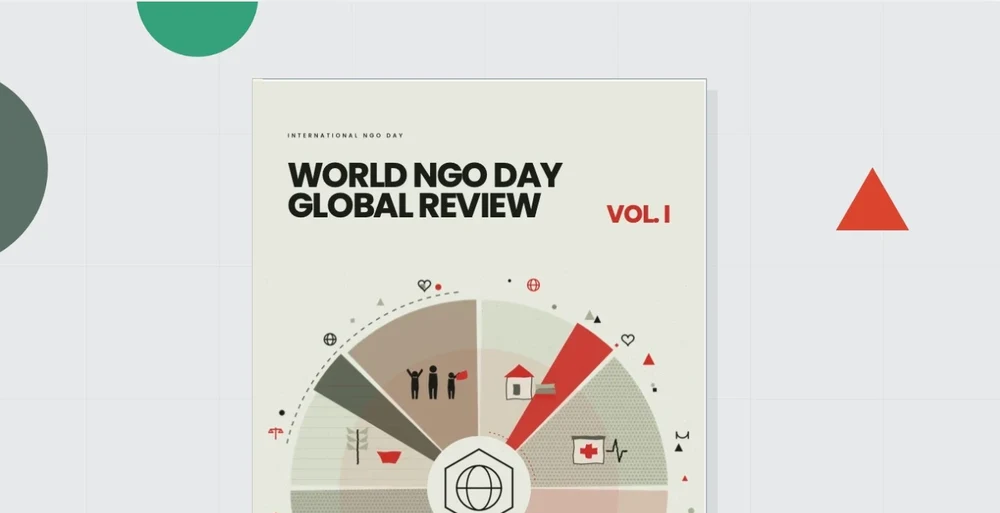
The first edition records how the Day has developed, country by country, with named sources.
There are many ways to take part in World NGO Day.
For over a decade, the symbol has represented unity, diversity, and the people behind civil society, celebrated every 27 February.
The first global guide to discovering cities and their nonprofit-friendly places, where organizations and communities meet, connect, celebrate, convene and collaborate, featuring exclusive interviews, local recommendations, original photography and art.
 Volume 1 · USA
West Hollywood, San Diego, Los Angeles, Chicago, Washington D.C. and New York.
SubscribeLearn who safeguards the legacy of World NGO Day and how you can support it.

FriendsHAUS Founder and Assistance League of Los Angeles Board Member J’Net Nguyen joins as Executive Advisor.
Read MoreWorld NGO Day is more than a celebration. Held every 27 February, it is the only global day dedicated to honoring the people behind nonprofits and non-governmental organizations.
Anyone can mark the Day. Choose an activity that works best for you and your community.
Spread the word on social media. Use #WorldNGODay and #NGODay to amplify the stories of the organizations you know.
Host an event, fair, discussion, marathon, or awards evening. Work with schools, universities, or city leaders.
Run a photo exhibition, create a short documentary, or launch an awareness campaign—and make an impact.
Plan, promote and celebrate the Day — and show your community what your organization achieved this year.
Share your achievements, milestones, and impact. A short video from a leader or beneficiary can reach further than a press release.
Post updates about your work, tag partners, supporters, and beneficiaries, and encourage staff and volunteers to share. Visuals and short videos perform best.
Offer interviews, articles or features to local newspapers, magazines and news channels. Include the official hashtags in every release.
Webinars, panels or workshops, online or in person — ideally co-hosted with another local organization so the day builds a partnership.
Mark the Day by shining a light on the organizations and causes you support.
Highlight your social responsibility work, the partnerships behind it, and the impact they have achieved.
Share posts, videos, or short case studies highlighting the organizations you support and why their work matters. Transparency is the point.
Bring the nonprofits you support to local media—offer their stories, spokespeople, and impact data, not just your own.
Invite employees and partners to take part — stories, discussions, a small event. Use the day to unite the team around shared values.
Recognize the nonprofits working in your community, and put that recognition on the public record.
Mark the Day on the public record by recognizing local organizations and their achievements. Publish it through official channels so the recognition can be referenced later.
Offer interviews or feature stories highlighting your support for civil society to local news outlets, newspapers, and magazines.
A 60–90-second message of thanks to local NGOs from a named office-holder—durable, quotable, and valuable for years to come.
Include #WorldNGODay and #NGODay in press releases, posts and media work so the observance is findable and counted.
Invite your community to say what the Day means to them — posts, video, newsletters, a live Q&A.
Use your platforms to explain what nonprofits and non-governmental organizations do. Partner with a school, university or media.
Bring people together: virtual panels, fireside chats, meetups, marathons, hackathons.
Name the people who do the work — staff, volunteers, board members, founders — and say publicly what they achieved this year.
Marking the Day once is a celebration. Writing it into a calendar is a decision that outlives whoever made it. There are two routes, and the first usually leads to the second.
A city or county can recognize World NGO Day on its own authority, without waiting for national action. A mayor’s signature is where that record begins.
Two countries have written the Day into national law, and both arrived by the same route. It is repeatable.
The Seimas added Pasaulinė NVO diena to the Law on Memorable Days on 8 June, by 94 votes to one with 10 abstentions, on a proposal from the Speaker. The first country in the world to do so.
The Saeima added 27 February to the Law on Public Holidays, Commemoration Days and Celebration Days — on 27 February itself. An earlier proposal had been declined in 2022, so this was a contested path, not a formality.
The World NGO Day logo is free to use when celebrating nonprofits, NGOs, CSOs, charities, foundations, and the people behind them. Create a free account to access the MyWND workspace, where you’ll find the brand guide, logo files, Global Review, Nonprofit City Guides, and other resources—all in one place.
The brand guide · Logo files · The Global Review · Nonprofit City Guides
Use only “World NGO Day” or “World Non-Governmental Organization Day”. Avoid variations.
The logo is free for everyone to use when celebrating NGOs, nonprofits, CSOs, charities and foundations.
Official websites are worldngoday.org and worldngoday.com.
Official hashtags: #WorldNGODay, #NGODay, #DíaMundialDeLasONG, #JournéeMondialeDesONG.
Do not alter the logo. It symbolizes unity and diversity, inspired by a beehive.
Do not change the logo’s colors. They represent the four seasons.
Do not use the logo or name for illegal, questionable or misleading fundraising.
Do not use the name “World NGO Day Global Council”. It is legally protected.